
By Ujala Umair
Transport & Logistics is the backbone of Global trade and daily business operations. Transport is the physical transport of people and goods by road, air, sea, or rail from one place to another. Logistics, meanwhile, is the management, coordination, and organization of the movement of goods to the right person, at the right time, in the right manner.
Companies such as Quick Shift Moving are particularly dependent on the transport and logistics systems in today’s fast-paced world to provide reliable moving services. Logistics is responsible for making everything happen in the background – from the packing and storage to the delivery and tracking.
Transport is about the movement of goods; logistics is about the organization of the whole process. Their combined strength forms a unified supply chain, benefiting industries like e-commerce, real estate, and relocation.
Is Transport and Logistics a good career choice?
Yes, transport and logistics is definitely a career where there is a lot of potential. The world is seeing a surge in the number of skilled workers, driven by the rise of e-commerce, global trade and relocation services. Job roles in this area include supply chain manager, logistics coordinator, transport planner, warehouse manager and operations executive.
It’s a great option for individuals who enjoy problem-solving, planning, and working in dynamic environments. In addition, there is decent pay and prospects for advancement in the industry.
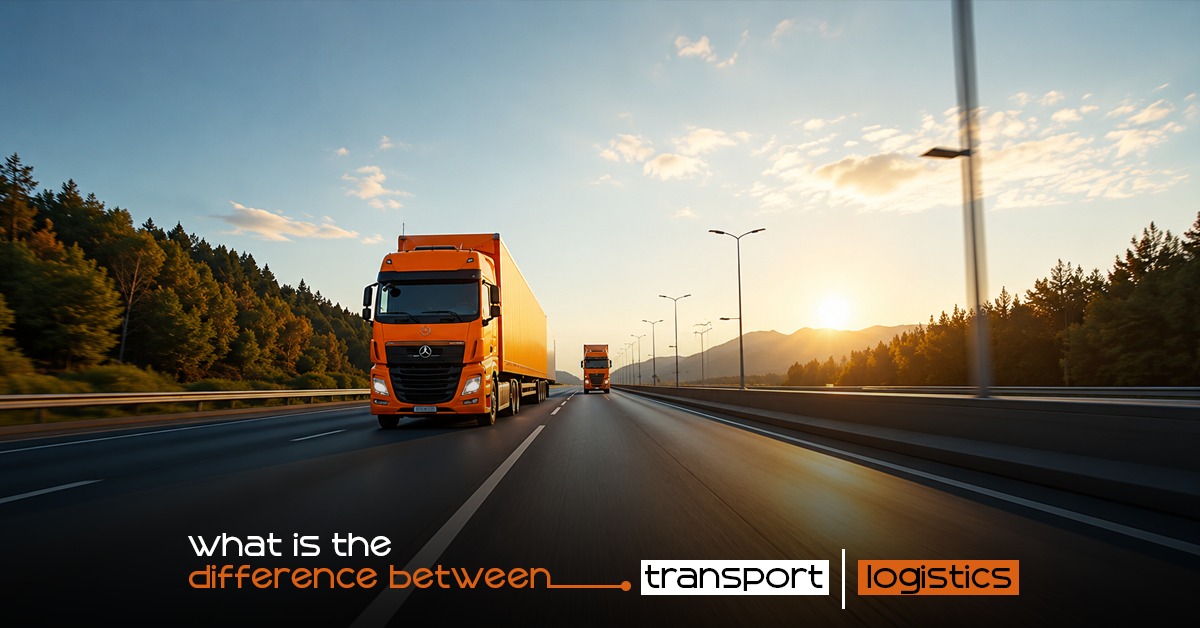
What is the Difference Between Transport and Logistics?
The only difference is in the scope:
Transport is just about getting somewhere with something or somebody.
Logistics refers to transport but also planning, storage, inventory, packaging, and management of delivery.
Transport is an aspect of logistics, in simple terms. Logistics is the larger system for creating efficiency and coordination in the entire supply chain.

Why study Transport and Logistics?
Transport and logistics courses provide you with practical, analytical skills needed in the working world. You gain knowledge of supply chain management, inventory control, distribution systems, and global trade operations.
In the moving industry, where time is of the essence, efficiency is key, and customer satisfaction is paramount, this field is particularly significant. You can find employment in a variety of industries such as shipping, aviation, retail, and relocation services.
Would Transport and Logistics be a Good Course?
Yes, it is a course full of value and career-oriented. It combines business management and practical business activities, making it perfect for students seeking theoretical knowledge and practical skills.
The course equips you for leadership positions in logistics firms, transport companies, and supply chain departments. It also provides the opportunity to pursue my study abroad plans.
What is the duration of Transport & Logistics studies?
It will take anywhere from a few minutes to a few hours depending on the amount of work performed:
Diploma: 1–2 years
Bachelor’s Degree: 3–4 years
Master’s Degree: 1–2 years
There are also short certifications that can be completed for a rapid introduction into the field.

FAQs
1. Are transportation and logistics required?
Yes, it is one of the fastest-growing industries globally because of the growth of e-commerce and global trade.
2. Will I be able to get a job overseas in this career path?
Absolutely. Logistics skills are required in many countries, and there are global career opportunities.
3. Do you require good math skills?
It’s useful to have a basic understanding of math and analytical skills, but it’s not commonly essential.
4. Logistics professionals can work in a variety of industries.
Retail, moving companies such as Quick Shift Moving, shipping, and airlines.
5. Is a job in logistics stressful?
It is typically fast-paced but is rewarding to those who like to plan and solve problems.