
By Ujala Umair
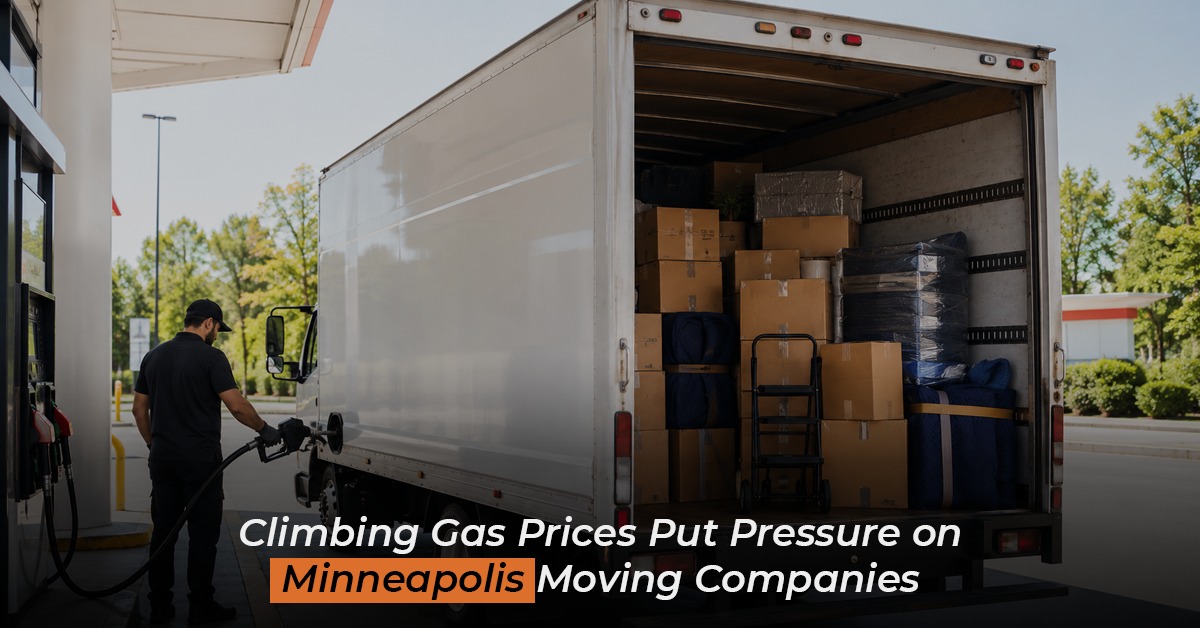
High gas prices are a growing worry in the United States, and they are especially taking a bite out of moving companies in Minneapolis. As with other areas, rising gas prices are having a profound impact on the cost of operations, pricing policies, and service delivery in the local moving industry.
The increasing pressure from fuel costs
Fuel is one of the highest costs that moving companies have to incur when doing their job. Whether you’re moving from a nearby home to another neighborhood or from one city to another, trucks use a lot of gas or diesel. With the price of gas rising, Minneapolis moving companies have to make their budgets and logistics adjustments.
Even a small fuel price hike can impact the bottom line for small and medium-sized movers. Price increases will have a greater impact on smaller players initially but will eventually impact players of all sizes in the market.
The effect that the fuel price hike has on moving prices.
Increased gas prices have one of the more obvious consequences—higher moving expenses for customers. To cover costs, a number of Minneapolis moving companies are adding fuel surcharges or changing their hourly rates.
This can be inconvenient for customers but is a fact of life when doing business in a high-cost environment. Clear and transparent pricing and communication are necessary to ensure trust between movers and their clients.
Moving companies will make adjustments to your operation.
- Minneapolis moving companies have been forced to implement some strategies to deal with the ever-increasing fuel prices:
- Optimized routing: routing with GPS and logistics software to minimize unnecessary driving miles.
- Job scheduling: Job concentration for best utilization of fuel resources.
- Fuel efficiency enhancement in trucks: Fleet upgrades.
- Load Management involves maximizing the capacity of the truck for each trip to minimize the number of trips.
Fuel costs and boost efficiency and sustainability.
Increased competition from local businesses.Competition from local businesses.
The toughest challenge is for local moving companies, particularly those that are independent. They tend to have fewer resources to deal with increasing costs than large corporations do. This puts strain on their pricing, staffing, and sustainability.
Businesses need to consider the cost and profitability in a competitive market such as Minneapolis. If companies don’t adapt, they run the risk of losing their customers or operating at a loss.
Customers’ behaviors are evolving.
In addition, the increased cost of moving is impacting customers. Some people are:
- Delaying non-essential moves
- Redesizing their relocation plans
- Making a more detailed comparison of several estimates.
Once you’ve made the decision to move, you may want to consider moving at off-peak times in order to save money.
This change in attitude has been a catalyst for moving companies to be more flexible and customer-centric.
Long-Term Outlook for Minneapolis Movers
Fuel costs can vary, but the rising cost of operations is likely to remain. To remain competitive, moving companies in Minneapolis need to adopt technology, enhance efficiency, and seek out other means of energy.
Forward-thinking firms are even now looking into the future of electric or hybrid trucks as a long-term investment, but the move is still in its infancy.
Conclusion
The rising cost of gas is leaving no doubt that moving companies in Minneapolis are feeling the strain. The industry is in the midst of a major transformation, ranging from higher operational costs to evolving customer demands. But with the right approach and flexibility, relocating companies can overcome these challenges and continue to provide reliable moving services.
FAQs
1. What are the reasons for this to happen?
More moving costs include rising gas prices, higher labor costs, and inflation.
2. Can you find the number of passengers on a bus?
While not every company does, some do have fuel costs incorporated in the price or an additional surcharge.
3. What can I do to cut the cost of my move?
Move at a different time of the year, clear out the clutter before moving, and research several companies before hiring.
4. Is there a strong demand for fuel-efficient trucks in the moving industry?
They are gaining traction as companies seek to cut costs and emissions related to fuel usage.
5. Will gas prices drop, and will moving prices go down?
It’s possible, but it could also take other factors into account, such as labor and demand, which is why prices may not necessarily drop right away.